Wednesday, April 8, 2009

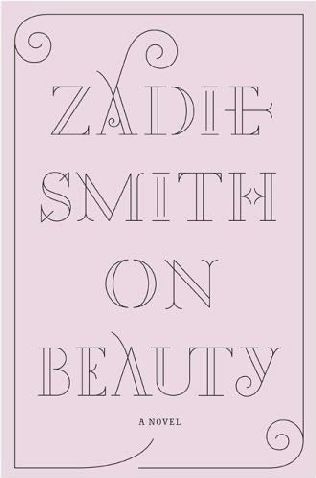
On Beauty

Zadie Smith on Art
In an interview Zadie Smith says that writers should not "hit their readers over the head" with their morals. The artist doesn't have to be a moral person, but a good work of art is honest and truthful in the artist's perception of the world. Because of self-deception, this is really difficult to convey in art--just as it is really difficult to comprehend in life. When writers berate you with their ideas, you feel as if you can't trust them. Instead, "good" artists will open a range of possibilities for the reader in order for the reader to see each and every side of the picture.

This is particularly relevant in the On Beauty because it deals with "The Culture Wars." On the right side, it is argued that students should study only the "greats" of the known canon. On the left side, it is argued that students should study multi-cultural works that do not necessarily fall into the category of "the greats" because all work can be seen as great.

Zadie Smith vs. 'Zadie Smith'
There is a difference between the real author and the person who has become an idolized bard. The left has done what the right does in tauting her as a "great" author. The 'me vs. them' has turned into an 'us vs. them.' So what is they right way to think about genius? If this book is "good art" it will offer multiple answers to this question, with multi-faceted characters on all sides of this argument. Delving into these deep characters offers an analogy for moral behavior in real life, and how we should develop real relationships.

In the novel...
Jerome is the bridge between his family (on the left) and the Kipps (on the right). The Belseys are Jerome's family, and they live in Wellington, Massachusetts. The mother(Kiki) and father(Howard) are fairly loose in their rules with children. The Kippses live in England and are a much more conservative family. They are pro-family, pro-busniess, and are practicing Christians. There is a rivalry between Monty Kipps and Howard Belsey. They are both professors of Renaissance art, and are both writing books about Rembrandt. Monty's book will hit the bestseller list, while Howard's book is still strewn about his study. Howard is searching for a way to prove that Rembrandt wasn't a great artist, while we can assume that Monty is working to prove the opposite. Jerome left to work for Monty over the summer. Perhaps he did it to get his father's attention, or perhaps he really wanted to learn a counter-idealogy to the one under which he has been brought up. Maybe he wants to get back at his father for having an affair; or maybe he's just constitionally different from the rest of his family. (People are their own people, after all). Either way, when Jerome comes back from England, he realizes that he has fallen in love with the Kipps family.

Sunday, April 5, 2009

Maria, or the Wrongs of Woman

Monday 4/6
I liked the novella Wrongs of Woman more than the Vindication of the Rights of Woman. Although the ideas put forward in the Rights of Woman are all well-stated and interesting, the reading is just a bit dry. Wrongs of Woman, however, was much more of a "page-turner" as I found myself wanting to know what would happen to Maria. Now, superficially, it may seem that just because the Wrongs of Woman is easier to read, its words also carry less meaning. I definitely found that this was not the case. When reading a novella (instead of a proclamation of a treatise) you just have to look beyond the plot-oriented words and find the deeper meaning. This was true of Wrongs of Woman. In the novel's ending, for example, one is left to contemplate whether the individual desire for suicide is justified and more important than the necessity of staying alive to take care of one's children. If this were a proclamation, the "right" answer would simply be declared.

Thursday, April 2, 2009

Art and Lies: Romance

homework for Friday, 4/3
Do a close reading of a particular passage in Art and Lies: what question does it stimulate you to ask? What does it answer?

First Section of "Handel" pages 14-15:
I was standing at the station, waiting for the train, when a woman approached me, with a wilting red rose in a plastic wrapper.
'Buy it for your lucky day.'
'When will that be?'
'The day you fall in love. I see romance for you. A tall blonde lady.'
'Romance does not interest me.'
She stared at me as though I had uttered a blasphemy in church, and I suppose we were in a church of a kind, the portable temple of sentimentality that can be flapping about your head at a moment's notice...My colleagues think me a remote sort of man, but, if I do not know what feeling is, at least I have not yet settled down into what I know it is not.
What is romance? Why are me made to feel like we need it?
If we don't desire romance, we are made to feel like something is wrong with us, like some significant part of us is missing. I think this ties in with our previous discussions about the pressure to lead a fairy tale kind of life. Romance is the ultimate goal; if you are involved in some sort of romance, you aren't just supposed to wish for one--you must pine for one. And if you simply don't think about romance at all, you are not a part of society. And this is not just a Western idea. In Japan, for example, the annual Tanabata Festival involves tying paper slips to trees that contain wishes for the fulfillment of romances.

Clearly, Handel is aware of this distinction between himself and the lady selling roses. He can perceive the disdain that the lady feels for him, and he understands the mystery he presents to his colleagues. But Handel truly isn't interested in romance. While at first it may seem as if this is a sad, pitiable quality within person, it retains a sense of respectability. Handel doesn't understand the feelings associated with romance; thus, he does not want to falsely sink into something just for the sake of being a part of society. He knows there must be more to romance than everyone believes there to be; he knows he is missing something, but unsure of what it is. And at least he possesses enough self-awareness to understand that since he knows what romance is not, he should wait to discover what it is before jumping in.

This seems to be cautious on Handel's part, and he does strike as a cautious sort of man. But perhaps his ideas hold some validity--before we simply follow the rest of the flock, we should stop and evaluate: do we understand what we're following? Does it make sense? Perhaps we should be like Handel, and instead of deciding to follow, we should wait until we are ready to lead.

Monday, March 30, 2009

"Great Art"


Notes 3/30 Laura Mandell's theory of literary art:
The novel emerged in the 18th century, and the short story came into existence in about 1800. With these developments, genre fiction (which is formulaic) came into being.Certain genres of fiction and certain genre fiction writers have been included in the literary canon, while others have been excluded. Theoretically, the canon has now been blown apart. The study of "great" literature has been replaced with cultural studies. Some cultural studies proponents want to abandon the concept of "great art." Aside from the fact that this wouldn't work, it is not a good idea; we are all artists, and should all respect each other as such. However, when we think we find out what great art is, we project ourselves onto that art, giving credit to these artists and not to ourselves. In the "Stand By Me" video we watched on YouTube, it was easy to view all the musicians as great artists, despite the fact that they were "ordinary" people.
So why is it so hard for us to recognize the artists within ourselves, and within the "ordinary" people around us? Part of the reason is that we have a finite amount of attention that we have to give as well as a limited amount of attention that we receive. Perhaps from now on (at least for the rest of the semester) we should try to see everything as great art. If we don't love it and understand it, we should identify the fault as being within ourselves. Maybe we just need to learn more, to understand more, to become more open.

Thursday, March 26, 2009

Digitizing Text: "Child and Flowers"


Homework for 3/27
Go to poetess archive
Look at three versions of Bijon poem (child and flowers): page image, HTML version, TEI encoded version
Answer these questions:

Is the poem the same in these 3 versions?
Although the words remained unaltered, I found each version of "Child and Flowers" to be slightly different. Reading the HTML version was much like reading any old page on the web, and it simply felt different from reading an actual, tangible text. I really didn't have a sense for the authenticity of the poem. This feeling was further extended by my reading of the poem in the TEI encoded v
ersion. If i had ever stumbled upon such a format in the past, I simply would have dismissed it on the grounds that there must be some sort of technological error of transfer--much like when I try to open a document in Word and it ends up looking like a strange, unintelligible code. Once I got used to the format, I found that I could simply ignore the surrounding (and to me, meaningless) text. I think that the final version, the page image, was my favorite way to read the text. It felt more like reading an actual book, and I could more greatly appreciate the poem for its textual genuineness. Thus, the differences between these versions came not from the differences in text, but rather from the sentiments associated with each respective version.
What difference will digitzing make to our understanding of poems?
Digitizing poems allows the texts to be more easily accessible to a greater number of people. As we learned with programs like JUXTA and TagCrowd, the digitization of texts provides new and expanded ways of conducting research, leading to fresh perpectives and offbeat theories. Digitizing texts also gives them an aura of permanence that we have come to both expect and reply upon in an increasingly digitized world.
Apply the poem's theme about art to the poem itself: does digitizing contribute to Heman's aim in writing the poem?
I think that Heman's aim in writing the poem is to both create and preserve a piece of art. Digitizing, then, contributes to Heman's aim because it lends a sense of immortality to the poem itself.

In Class, 3/27
"For a day is coming to quell the tone
That rings in thy laughter, thou joyous one!
And to dim thy brow with a touch of care.
Under the gloss of its clustering hair;
And to tame the flash of thy cloudless eyes
Into the stillness of autumn skies;
And to teach thee that grief hath her needful part,
Midst the hidden things of each human heart!" (lines 33-40)

In this passage, the speaker is describing the time when a child will lose her innocence, when her eyes will be opened to the sorrows of the world. The speaker sees children as being capable of making incredible, untainted observations of the natural world around them. The speaker, however, is idealizing childhood and its perceived air of innocence, not taking into account the fact that children are not always the happy, carefree individuals that adults believe them to be.

In class discussion:
The format does not necessarily change the meaning of the text, but it takes away from the reader's ability to process the poem and find its significance. The TEI version, for example, was so full of codes and symbols that I was too distracted to really read the poem. The important aspect of the TEI format is the surrounding code; a simple reading of the poem would be easier (and more logical) to do in the HTML or Page Image version.

These formats come into being in various ways. The "technology" of the printed book is so commonplace to us that we simply overlook it. It is extremely expensive to put page images online, but they offer the best representation of the original text. The HTML or Text versions, for example, often misplace stanza breaks or add strange characters. Even so, digitizing texts preserves them in a way that books cannot.

Monday, March 23, 2009

Digital Texts 3/23

1.Creating Tag Clouds for three versions of Frankenstein in small groups:
I created a Tag Cloud for the 1818 edition. The key words in my Cloud were friend, friendship, interest, noble, overcome, desire, creature, believed, and confidence. This edition and the Thomas edition are more similar, sharing key words like "friend" and "friendship." The 1831 edition, however, has darker words, including words like "dark" and "despair." The emphasis upon these words shows a greater concern for human emotion and the misery that consumes Victor.

Comparing these clouds helped me to understand the textual differences between the three versions, clearly illuminating the frequency of certain words. I was thus able to see the progression from the 1818 edition to the Thomas edition to the 1831 edition, as the text moved to incorporate more words about the human condition, particularly in relation to emotions.

Tag Cloud (1818 edition)
admiration although appears art astonishing believed confidence creature desire destroyed edition flow friend friendship history hope interest leaves letter life lost manner mentioned misery noble offended overcome pass pedantry plan pleased possible powers related respecting several speaks stranger succeeded suggested sun therefore tries true trust unsocial utterly watching wise wish

Did Mary Shelley write three different novels?
No, I do not think that Shelley wrote three different novels. I believe that each version was an expansion upon the previous one, adding new ideas and dissolving ones she no longer found important.
In these passages, the stranger agrees to different things. Why do those changes matter?
In the 1818 version, the stranger agrees that friendship is desirable and possible. Since he once had a friend, he is fit to make such judgments. He also says that since he has lost everything, he has no hope and cannot begin life anew. In the Thomas edition, the stranger agrees to the same thing, that friendship is desirable and attainable. In the 1831 edition, however, the stranger agrees that we are only "half made up" and that a friend ought to be our better half. Without such a friend, he says, we will remain weak and imperfect. These changes matter because they expound upon Victor's ideas about human nature. They show us his transformation into an extremely contemplative person, a person who understands the importance of relationships.
How does digitizing these texts help us think about these versions? How does it help?
Digitizing texts helps us to visualize them in a new and different way. This allows us to formulate fresh ideas about texts we have previously read, providing new insights. Essentially, digitzing texts is just another way of reinvigorating them.

Friday, March 20, 2009

Aurora Leigh, Book V


Can there be heroes in modern life? According to the poem? and to you?
According to Aurora Leigh, heroes most definitely exist within modern life. She writes "All actual heroes are essential men/And all men possible heroes" (151-152). Clearly, AL believes in the heroic potential of every individual. In order to find such heroes, AL encourages not to look to the past, but to be mindful of the present. If we depend upon the past for our heroes, we will find only conflated versions of mythic, larger-than-life idols. The true heroes are among us, and we must see them for who they are--"essential men", ordinary people.

I agree with Aurora Leigh. There are heroes within our lives, whether we know them personally or view them from afar. These people are so much more real than the epic heroes we read of in history books or see in movies. These real people are not always famous enough to be recorded in the volumes of history, but such idolatry is not necessary is the making of a hero.